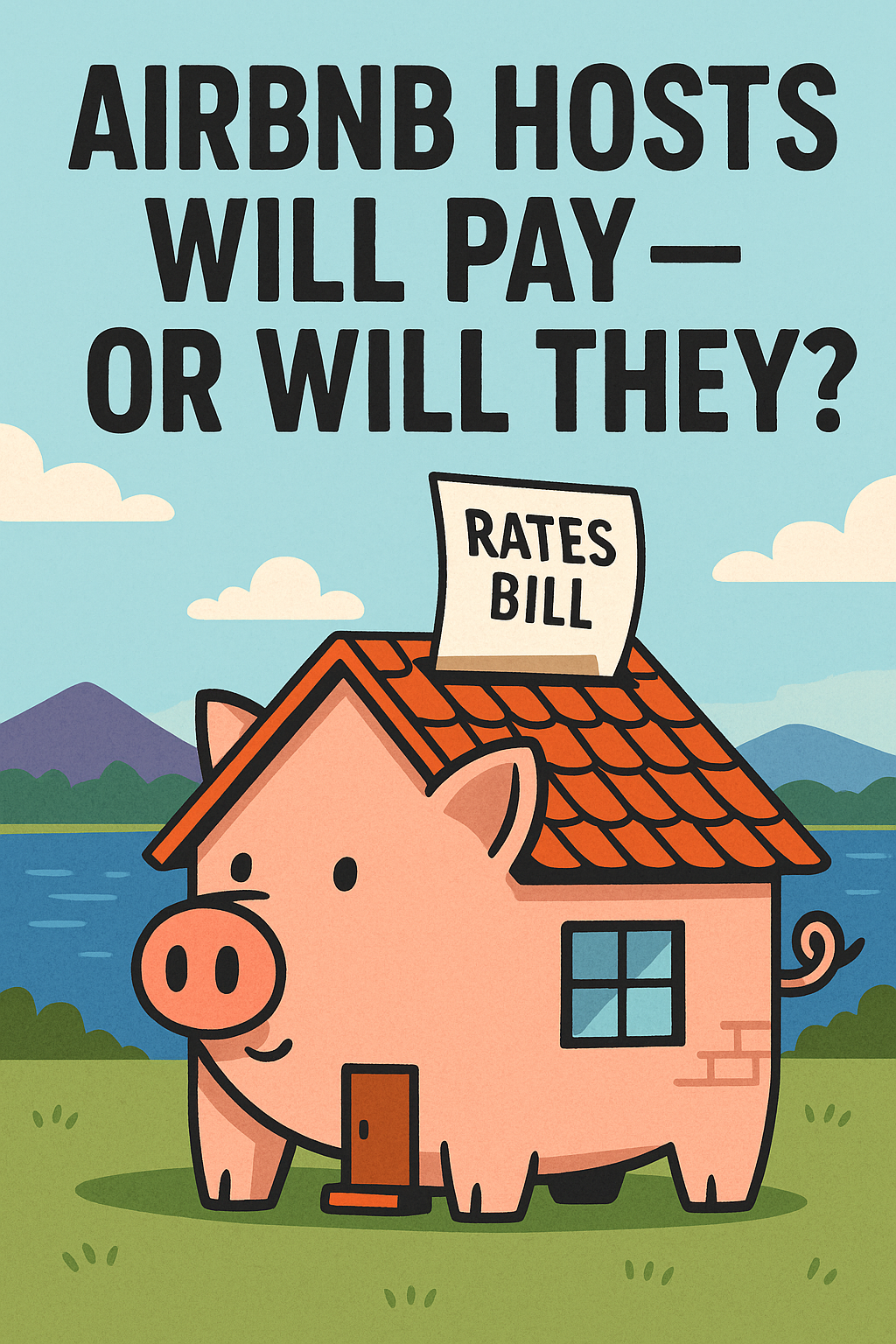
John Funnell’s Rental Proposal Isn’t a Dictatorship (But It Needs Help)
“Just because it sounds bold doesn’t mean it’s a bad idea — but bold ideas need scrutiny, not slogans.”
One of the more talked-about ideas in John Funnell’s mayoral campaign is his Airbnb/rental proposal, modelled loosely off what Queenstown has already put in place. It’s aimed at:
Charging a targeted rate on houses used entirely for Airbnb purposes
Exempting families renting out a sleepout or spare room to make ends meet
Raising ~$1.2 million annually to fund Taupō’s tourism marketing
Potentially easing the local housing shortage by nudging some Airbnbs back into long-term rental use
Sounds fair enough, right?
So why are some people calling it a dictatorship?
What the Policy Actually Says
Let’s look at the proposal in John’s own words (direct from his campaign page):
“These [Airbnb] houses enjoy the same marketing benefits as hotels, motels and operators who are already rated on a higher rate to fund our tourism marketing. Our proposal will be to target a rate on full-time Airbnb houses…
A quick summary by our team estimates an additional $1.2 million income to council if these houses were rated on a commercial level.”
“We would NOT target family homes who use a sleepout or room for additional income to help with their cost of living.”
The idea is to free up long-term rentals, reduce ratepayer burden, and recapture costs from a segment of the market that benefits heavily from tourism dollars but pays minimal council rates in return.
Will It Actually Work in Taupō?
Here’s what we know:
Taupō has 2,700+ active short-term rentals
Average nightly rate = $208
Average occupancy = 48%
Full-time STRs are concentrated around lakefronts, holiday zones, and fringe suburbs
So yes, this could work economically, especially if:
Targeted only at full-time, commercial-level Airbnbs
Exemptions are clear and easy to understand
Revenue is transparently reported and well-used
It nudges even a small % of homes back into long-term rental
Taupō is not Queenstown and it’s not pretending to be, but it shares the same pressures:
tourism-heavy town, rising rates, and locals struggling to rent.
—
Why Some Are Calling It “Dictatorial”
It’s not necessarily the idea people are reacting to — it’s the language, the presentation, and the feeling that it could be used as a hammer, not a scalpel.
Let’s break it down:
❌ “We will have a backlash like Barcelona, Venice, Queenstown…”
→ Sounds fear-mongering. Taupō isn’t a mega-tourist city. People don’t like being threatened.
❌ “These houses enjoy the same marketing benefits…”
→ Implies hosts are freeloading. But many are locals trying to survive rising costs. It oversimplifies the landscape.
❌ “We must control rate rises. We must separate the nice-to-haves…”
→ The tone is top-down, not collaborative. It reads like command-and-control. That’s not how you get buy-in.
Even if people agree with the idea, they don’t want to feel bulldozed by it.
My Honest Verdict
The model is solid, and the marketing isn’t.
This could absolutely work if it’s:
Fairly applied
Clearly communicated
Backed by housing and tourism data
Introduced with the community, not at them
But if it’s rolled out with hardline language and a “trust me, I know best” attitude — it’ll spark resistance, even among those who’d otherwise be on board.
We’ve seen this before in Taupō. What works is transparency, not tone-policing.
A Better Way to Roll It Out: My 6‑Step Plan for Taupō
Let’s make the Airbnb rating model work for the community, not just at the community.
1. Clear Definitions, Upfront
What’s a full-time Airbnb?
What’s exempt?
What qualifies as commercial?
Don’t leave people guessing.
2. Tiered Rates, Not Flat Fees
Don’t treat every host the same. Scale it based on:
Frequency of rental
Property size/type
Location
A tiered model feels fairer and avoids punishing casual hosts.
3. Start with a Voluntary Levy
Invite full-time Airbnb owners to opt in to a tourism fund for 12 months.
Offer:
Recognition on the visitor site
Transparency in where the funds go
Then, if it doesn’t work, you’ve built public support for a firmer model.
4. Ring-Fenced Fund with Clear Reporting
Keep all revenue from the new rate in a separate tourism & infrastructure fund.
Then publish:
How much was raised
Where it was spent
What benefits were delivered
This shows ratepayers that this isn’t a cash grab.
5. Trial It in One Zone First
Don’t blanket the district overnight. Trial the model in Taupō Central or Acacia Bay first.
Gather data. Invite feedback. Adjust.
6. Fix the Tone
Swap fear-mongering for real talk.
Try this:
“We want to build a fairer system where everyone who benefits from Taupō’s tourism helps support the place we love.”
Not this:
“We’ll end up like Barcelona.”
Final Thoughts
“We cannot continue to do the same old same old and expect different outcomes.”
— John Funnell
Fair enough; but we also can’t keep doing the same old communication style and expect public trust to magically appear.
Taupō doesn’t need a dictator.
It needs a good communicator with smart tools and this could be one of them.
If you’ve got thoughts on this proposal whether you’re a host, a renter, a ratepayer, or just someone trying to make Taupō work — let’s talk.
Civil discussion welcome. Sarcasm optional.


Leave a Reply